Bakiya: A Script Handwritten Font for Creative Branding
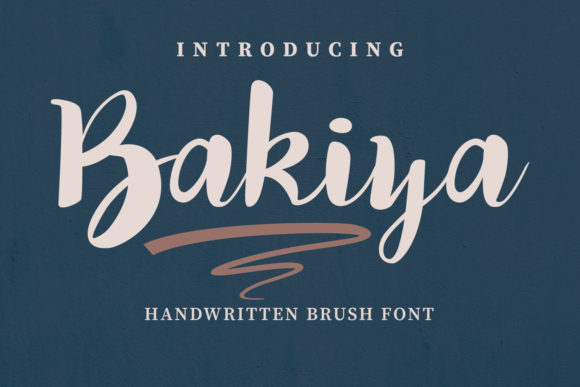
There’s a moment in every design project where you open a blank brand board and feel the weight of possibility. That’s when I first tested Bakiya on a logo concept for a boutique identity project. As a script handwritten font, Bakiya brought a sense of personality and warmth that felt just right for the brand’s artisanal vibe. It wasn’t just another font—it was a conversation starter.
Bakiya for Boutique Logos and Brand Identity
When working on a boutique logo, the choice of font can make or break the brand’s visual story. Bakiya, with its chic and trendy handwriting, offered a perfect balance between elegance and approachability. I used it as the primary typeface for the logo, pairing it with a minimalist sans serif for contrast. The result was a brand identity that felt both modern and handcrafted, exactly what the client was looking for.
Bakiya’s PUA encoding made it easy to access alternate characters and ligatures, which came in handy when designing the brand board. Whether I was creating a tagline or adding subtle decorative elements, Bakiya’s versatility allowed me to maintain consistency without sacrificing style. It’s a font that feels at home in both digital and print formats, making it a valuable asset for any designer’s toolkit.
Bakiya for Packaging Design and Product Labels
Another project that benefited from Bakiya was a skincare product line’s packaging mockup. The client wanted something that felt organic yet professional. I used Bakiya for the product labels, letting its flowing lines and soft curves echo the natural ingredients in their formulations.
Testing Bakiya at different sizes helped me ensure readability, especially since the font is meant for short phrases and accents rather than long body text. On a printed label, Bakiya maintained its charm even when scaled down, which is a big plus for small business owners and handmade sellers who rely on clear, eye-catching typography.
One thing to note is that Bakiya isn’t designed for large blocks of text. If you’re working on a website or a brochure with extensive content, it’s best used as an accent or headline font. That said, its charm shines through in smaller applications like packaging, social media graphics, and branded signage.
Bakiya for Social Media Graphics and Web Design
In today’s fast-paced digital world, social media graphics are crucial for brand visibility. I used Bakiya in a series of Instagram posts for a local café’s visual refresh. Its trendy handwriting added a personal touch to the content, making each post feel more engaging and relatable.
For web design, Bakiya performed well as a header font, especially when paired with a clean sans serif for body text. However, I recommend testing it in different contexts before finalizing its use. While Bakiya is PUA encoded and offers good multilingual support, it’s important to consider how it renders on various platforms and screen sizes.
If you’re using Bakiya for a website, make sure to check the font’s webfont availability and licensing terms. Bakiya is a premium font, so ensuring proper commercial use is essential, especially if you’re working on client projects or selling digital products.
Bakiya for Business Cards and Print-on-Demand Merchandise
Business cards are often overlooked in terms of design impact, but they play a vital role in first impressions. I used Bakiya on a set of handmade shop branding cards, letting its elegant strokes complement the overall aesthetic. The result was a set of cards that felt both professional and personal, which aligned perfectly with the brand’s mission.
When working with print-on-demand services, it’s important to verify that Bakiya is available in the required file formats. As a script handwritten font, it’s ideal for creative fonts and commercial font use, especially when paired with other typefaces to create a cohesive visual language.
One limitation to keep in mind is that Bakiya may not be the best choice for formal corporate environments. Its casual, handwritten style is more suited for creative studios, local restaurants, and boutique brands that want to convey a sense of authenticity and personality.
Bakiya for Editorial and Commercial Design Assets
Whether it’s a flyer, poster, or editorial layout, Bakiya has the potential to elevate any design. I used it in a creative studio identity project, where it served as the main typeface for headlines and call-to-action buttons. Its fluidity and charm made it stand out without overpowering the rest of the design.
Font pairing is key when using Bakiya. I often pair it with a bold serif or a geometric sans serif to create a striking contrast. This combination works well for both print and digital assets, allowing Bakiya to shine while maintaining readability and visual harmony.
Before using Bakiya in final client work, always test it across different mediums and contexts. Check how it looks on a shop sign, product mockup, or printed card. And don’t forget to review the included styles, alternates, and ligatures—these can add depth and character to your designs.
Ultimately, Bakiya is more than just a font—it’s a tool for storytelling. Whether you’re designing a logo, a packaging label, or a social media graphic, this script handwritten font has the potential to elevate your work and leave a lasting impression. With its chic and trendy style, Bakiya is a must-have addition to any designer’s font library.